@coffeedepot.lincoln
CEO, Streets Heaver Healthcare Computing
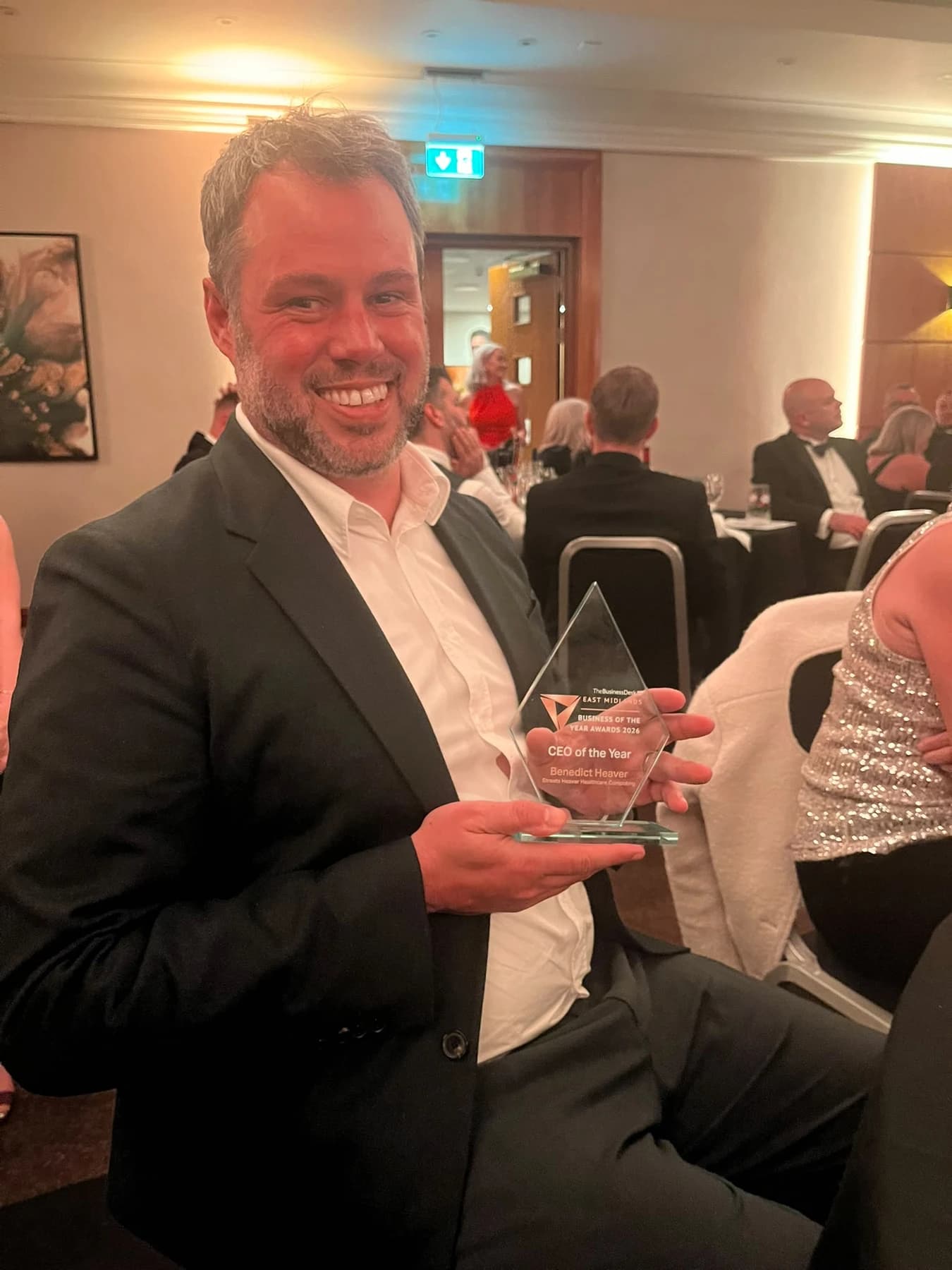
Benedict Heaver is the CEO of Streets Heaver Healthcare Computing, a software firm that specialises in the Healthcare industry. Benedict joined in 1999 and has risen up the ranks and was recently awarded CEO of the Year at the 2026 East Midlands Business Awards.
LoveLincoln
Benedict
I work in healthcare technology. Streets Heaver develops the Compucare System, a suite of applications used by private hospitals, clinics and NHS private patient units across the UK and Europe. It connects the many parts of delivering care, from patient administration and clinical workflows to finance, communication and reporting. Our role is to make healthcare’s complexity easier to manage, giving teams more time for patients and creating better experiences across the patient journey.
My part as CEO is to create the conditions for that to happen: provide clarity, invest for the long term and give talented people the trust to experiment, challenge assumptions and do work they are proud of. We have grown from 18 people when I joined in 1999 to more than 100 today, but I still want us to retain the curiosity and care of a smaller business. I see us not simply as a technology company, but as a learning organisation, enabling world-class healthcare through the latest technology and exceptional customer service.
LoveLincoln
Benedict
The next era will be defined not by who puts AI in the most places, but by who solves real problems safely and earns people’s trust.
Streets Heaver has moved from Unix through Windows and the internet to Software as a Service, but the biggest change now is AI. It is transforming how teams design, build, test and improve software, allowing smaller teams to explore ideas faster. For users, it can surface what matters, automate routine administration and provide timely insight within the workflow.
That does not mean replacing people. It means giving them better information and more time for the things only people can do: exercise judgement, show empathy and provide care. AI could also make digital healthcare more inclusive, adapting the experience to the person. But healthcare cannot “move fast and break things”. The next era will be defined not by who puts AI in the most places, but by who solves real problems safely and earns people’s trust.
LoveLincoln
Benedict
The biggest change is that we have all become consumers first and technology users second. Outside work, we expect technology to be instant, intuitive and personalised, and those expectations inevitably follow us into healthcare. People increasingly question why they must enter the same information twice, switch between systems or navigate a complicated process to complete a simple task. The complexity behind healthcare may be enormous, but the experience should not feel complicated.
Customers also want more than a supplier who fixes things when they break; they want a partner who understands their organisation, listens and helps them improve. In five years, I think expectations will move from “make this easy for me” to “why do I need to do this at all?” AI will increasingly anticipate what is needed and remove routine administration, while people will still expect healthcare-level security, transparency and responsibility.
LoveLincoln
Benedict
The healthcare technology market includes large multinational firms, specialist applications and well-funded start-ups, so competition is no longer easy to define. Healthcare itself is also changing, with new research, treatments and models of care creating businesses that can start without legacy technology or processes.
The next serious challenger may therefore come from somewhere unexpected: not by replacing an entire hospital system, but by solving one frustrating problem exceptionally well and growing from there. I find that exciting because it keeps established companies curious. Our 40 years of experience gives us enormous knowledge, but lasting competitiveness depends on balancing what works today with investment in our people, technology and tomorrow’s opportunities.
LoveLincoln
Benedict
Perhaps the crucial skill is remaining curious enough to discover what you do not yet know you will need.
When I joined, the industry needed strong technical knowledge, analytical thinking and an understanding of complicated hospital processes. Those skills still matter, but the people joining in ten years will need to move comfortably between technology, healthcare, ethics, communication and human behaviour. They must know how to ask better questions, challenge convincing answers from intelligent systems and recognise where human oversight is essential.
Above all, they will need curiosity beyond their own field. As a young man, Galileo studied art and chiaroscuro, learning how light and shadow reveal three-dimensional form. Years later, that knowledge helped him interpret what he saw through his telescope and recognise that the Moon had mountains, valleys and an uneven surface. He could not have predicted that connection, and neither can we predict every skill tomorrow’s workforce will need. That is why everyone at Streets Heaver receives 10% of their working week for personal development, around 16,000 hours over the past year. Perhaps the crucial skill is remaining curious enough to discover what you do not yet know you will need.
LoveLincoln
Benedict
Healthcare technology was once seen largely as infrastructure: essential, but invisible unless something went wrong. It is now recognised as a strategic part of improving access, productivity, patient experience and the sustainability of healthcare services. But technology is not the answer by itself; it creates value only when it understands the people using it, fits the realities of their work and solves a problem that genuinely matters.
In ten years, I would like people to see healthcare technology as an enabling partner: not something that distances clinicians from patients, but something that removes unnecessary administration and gives them more time to care. The best technology should almost disappear into the experience. People should notice that work is easier, information is available and patients receive a better service, not the system itself.
LoveLincoln
Benedict
You check your luggage in once and it moves through a complex network without you collecting it and explaining its destination at every stage. Why should healthcare information not work in much the same way?
For me, the problem is getting the right information to follow the patient seamlessly throughout their healthcare journey. Think about an airport: you check your luggage in once and it moves through a complex network without you collecting it and explaining its destination at every stage. Why should healthcare information not work in much the same way?
As a patient moves from referral to booking, consultation, treatment and follow-up, the right information and context should move with them. Patients should not have to repeat themselves, and teams should not need to re-enter information or search across systems. The next frontier is technology that surfaces the right insight to the right person at the right moment, not making decisions instead of people, but making healthcare feel genuinely joined up.
LoveLincoln
Benedict
One mistake was believing that digitising an existing process automatically transformed it. In many cases, we replaced paper with a screen but kept the same steps, delays and frustrations. Real transformation means questioning the process itself: why does this task exist, who needs the information, could it happen automatically, and what would we design if we started again today?
The current mistake is treating AI as either a miraculous solution or an existential threat. Both positions are too simplistic. The valuable work lies between those extremes: identifying practical uses, measuring whether they make a difference and creating governance that allows people to use AI confidently and responsibly. We should be ambitious about what it can achieve, but equally serious about how it is introduced.
LoveLincoln
Benedict
Lincoln is central to our story. My father, Paul, founded Streets Heaver here in 1986, and our first customer was Lincoln Private Hospital. Nearly 40 years later, I am the second generation to lead the business, while my father remains Chairman. We now support healthcare organisations across the UK and internationally, but we have never believed ambition meant leaving Lincoln behind. We are reinforcing that commitment with a new office at the Lincoln Science and Innovation Park, which we will move into next year. Even our rebrand draws inspiration in part from Lincolnshire-born Isaac Newton, keeping our next chapter connected to home.
Lincoln has given us a strong base, talented people and a grounded, long-term outlook. I would love to see even stronger links between schools, the University of Lincoln and local employers, helping young people understand that technology careers extend far beyond software development into product, implementation, data, marketing, operations and leadership. Lincoln should be recognised as a place where you can build both a great career and a business with national and international impact; we would like to think Streets Heaver is proof that you can.
A prediction to hold Benedict to
This is difficult, because part of me hopes any prediction I make turns out to be wrong. Our mission is to be curious enough to dream the impossible, and brave enough to make it a reality, and I believe some of the most exciting things Streets Heaver will be doing in five years probably are not on our roadmap today. As Rory Sutherland said, “When you demand logic, you pay a hidden price: you destroy magic.”
So my prediction is that Streets Heaver will be somewhere exciting in five years’ time, although I hope there are a few surprises between here and there. Technology will change, plans will evolve and new opportunities will emerge, but ultimately it will be our people, their curiosity, courage and ability to turn ideas into reality, who make the difference.